Tuesday, January 19, 2021

The Complete Guidance about cerelac | cerelac full information with pros & cons


WHEN SHOULD I START CERELAC FOR MY BABY?

When do you have to start feeding cerelac to your baby? this is often one question that knocks the mind of all moms such as you who are just unfolding the ways of this new journey of motherhood.

Well! the solution to the present depends completely on the expansion of your baby and also tons depends on the recommendation of the doctor you've got been visiting. However, WHO recommends breastfeeding the kid for six months exclusively but if the baby is undergrowing then tons of your time doctors’ advice to start out Cerelac at 4 months itself.

When you are starting solids for your baby, it's indeed the time to believe what are you getting to feed your baby as this decision will influence the health of your baby is every way.

“Yummy!! Delicious!! Nutrilicious!! What am i able to serve you more?”

Cerelac is unquestionably the primary choice for all doting mothers who want to offer the simplest to their lolos. it's cereals in it which is power full of all essential nutrients to supply proper growth and development to your baby.

Cerelac by itself may be a complete meal with no chemicals or preservatives added thereto . It takes care of the entire nutrition of your baby.

In this post, you'd get to understand intimately why do you have to be feeding cerelac to your baby and therefore the benefits it offers your baby.

PROS & CONS OF CERELAC – THE COMPLETE GUIDE

PROS OF CERELAC

Cerelac is that the given name that pops into our minds once we consider baby food shopping. Its sort of delicious flavours and simple preparation has made it a well-liked success.It is recommended by all paediatricians including the American Paediatric Society, to tend only your baby turns 6 months old.

However, it's always advisable to consult your doctor before starting your child on any solid food intake. you'll wish to feed your baby with homemade food made in your personal supervision, which is equally good. the main difference between Cerelac and homemade food is that Cerelac is fortified with iron and every one other essential minerals that function an entire meal for the growing baby.

Some of the pros of feeding your baby cerelac.
Very easy to organize you only need a scoop of the things and a few warm water and voila, dinner is served!
It provides the baby with the combined benefits of cereals, iron, Calcium, Vitamin D, protein, Zinc, Vitamin A, vitamin C and Omega 3 and omega 6. it's a complete of 18 important nutrients and it's freed from any chemical preservatives, flavours and hues .
• it's handy to hold in travels and outings.
Easily available in most stores.

baby-eating-cerelac-superbaby

When it involves homemade food you'd need to lookout of additional iron supplements present in carrot, pomegranate, spinach or other leafy vegetables. Cerelac is that the combination of milk and cereals which serve the simplest to the growing baby.

On a mean , Cerelac are often fed to babies till two years. Most moms prefer using it till one year after which they switch to home cooked food for providing variety and taste to their little babies.

feeding-cerelac

CONS OF CERELAC

Even though Cerelac is full of nutrition, it's a serious red flag – sugar.
Glucose, sucrose, fructose, lactose, dextrose, caramel, syrup , malt – these are a number of the names sugar sneaks through into your diet. Of course, you can't guarantee your baby will stand back from sweets all life – he/she will certainly taste an frozen dessert or 100 very shortly.

The sugar Wikipedia page lists obesity, cavity , diabetes, disorder and Alzheimer’s among health conditions that sugar bestows upon the planet . However, given the proven addictive nature of sugar that has been found to be like that of heroin, is it really an honest idea to introduce it because the first ever solid taste to your baby?

I just found caramel (water and sucrose) and maltodextrin within the cerelac box nearest to me. Multiply that by the recommended three level scoops 3 times each day for 6-month-olds, you're siphoning chunks of sugar into your little one’s diet.

Babies depend upon us adults to form decisions – what we start them off with will set the tone for the trail of their life. So its good to be extra careful and countercheck your choices when it involves babies.

CERELAC FOR WEIGHT GAIN


We have all seen the gorgeous chubby babies that star in cerelac commercials. And when our own little ones arrive leaner, we start worrying. Aren’t healthy babies alleged to chubby? Does a thin baby mean that you simply aren't doing the mom business right? seems , not all babies are built to be chubby. a number of them have leaner genetic blueprints which is okay. As long as your baby’s caregiver isn’t concerned about your baby, as long as he/she is gaining weight and is active, you don’t need to force in additional food or cerelac to your baby.

Cerelac offer great conveniences while travelling or on outings. it's very handy to be made and served. the inside track measurements and preparation should be exactly because it recommended thereon .

WHICH CERELAC IS BEST FOR A 6-MONTH-OLD BABY?

If your baby is 6 months or older, you can give him / her Stage 1 of Cerelac. The flavours available in Stage 1 Cerelac are Cerelac Rice, Cerelac Wheat and Cerelac Maize. You might be able to find other variants depending on where you live.

WHEN CAN I GIVE CERELAC TO MY BABY?

You can start giving your baby Cerelac as a part of a balanced diet when your little one turns 6 months old. Make sure you include appropriate servings of pureed fruits, vegetables, and single grain porridges along with Cerelac.

IS CERELAC GOOD FOR THE B?ABY

Cerelac is good for the baby as a last resort. It can be used when you are travelling or to prevent your baby from going to bed hungry because of unexpected circumstances. Sweeteners have been found to increase risks of cholesterol, heart disease and Alzheimer’s; feeding Cerelac which has sweeteners to your child every day is not recommended.

WHICH CERELAC IS BEST FOR A BABY?

Nestle has introduced Ceregrow Organic Selection for 2 to 5-year olds with organic grains, fruits and milk. Such food made from Organic Sources is best for a baby.

HOW MANY TIMES CERELAC A DAY?

The World Health Organization (WHO) recommends that you should give 6-month-olds solid food 2 to 3 times per day with formula or breastmilk. You can either give processed food like Cerelac 3 times a day or mix and match a few other purees of your choice.

CAN I GIVE CERELAC AT NIGHT?

The night is not the best time to try feeding solids for the first time to your little one. If your baby’s digestive system is not able to digest the Cerelac meal, he might suffer through the night with tummy upset, frequent bathrooms and colic. Moreover, studies have established that there is no difference in sleep between babies who were given solids at bedtime versus milk at bedtime. So, if your child is older than 9 months, you can give him Cerelac at bedtime. For younger babies, try introducing solids one by one in the day when you are available with full energy for help and care.

CAN WE GIVE CERELAC TO 5 MONTHS?

1. UNICEF
2. WHO
3. Health Canada
4. American Academy of Pediatrics
5. Australian National Health and Medical Research Council
6. American Academy of Family Pediatrics
All of these organizations have undertaken individual research and have concluded that babies should not be fed solids until they are 6 months old. Cereal at 5 months will do more harm than good to your baby, compromise her immune system and can result in health issues like obesity later.

CAN I MIX CERELAC WITH FORMULA MILK?

Never. You should never attempt to feed your baby Cerelac in a feeding bottle unless he has a specific medical condition and your paediatrician recommends doing so. Feeding Cerelac in a feeding bottle is a choking hazard and takes away from the amount of milk your baby needs. You are substituting nutrient-rich milk with high concentrated calories, depriving her of said nutrients and paving the path for overeating and obesity in the future. You should prepare Cerelac strictly following the instructions on the package – i.e., using lukewarm water and the recommended amount of cereal.

THE CONCLUSION

It would do your baby no harm if he/she has occasional cerelac meals. it's best if you give your baby an opportunity to experience a good array of flavours and textures, with cerelac together among them.

Monday, January 18, 2021

6-Month-Old Baby's Food Chart And Recipes

Six Month Old Baby's Food Chart And Recipes

The first foods offered to a baby are called stage 1 baby food. They are pureed and strained so that the little ones can gulp and digest them easily. They are low on allergy grade

However, consult a pediatrician before introducing any new food to your little one.

Below are some of the best foods for a six-month-old baby:

The first foods offered to a baby are called stage 1 baby food. they're pureed and strained in order that the small ones can gulp and digest them easily. they're low on allergy grade

However, consult a pediatrician before introducing any new food to your baby .

Below are a number of the simplest foods for a six-month-old baby:

1. Milk

Continue breast milk or formula for your baby because it is that the main source of nutrition for babies until one year . Breastfeed every two to 3 hours or on demand. Alternatively, offer 24-37 ounces of formula milk a day .

2. Stage 1 fruits

Apples, avocados, apricots, bananas, mango, nectarines, peaches, papaya, pears, plums, prunes, chikoo, pumpkin and kiwi pulp make great first foods for a baby. Remember to incorporate fruits in mashed or puree form only.

3. Stage 1 veggies


Babies can digest boiled and mashed vegetables like beans (green), carrots, sweet potato, squash, green peas, potatoes, baby marrow, butternut, and pumpkin.

4. Water

Give boiled and cooled-to-room-temperature water to your baby a minimum of thrice each day . Give water after the meal and not in between the feed because it may reduce the entire food intake.

5. Cereals and pulses

Cereals and pulses like rice, barley, oats, and lentils provide essential nutrients like proteins and minerals to the growing babies. Cook these things until they're soft and mash them.

6. Meat

You can add pureed and stewed poultry, and fish (less in mercury) to your baby’s diet. Ensure to get rid of bones while serving these foods.

Food Chart For Six-Month Baby

You may design your baby’s food chart on these lines:

Wake up time

      • Formula or breast milk. Continue breastfeeding for the rest of the day.

Breakfast (7:30 to 8am)

      • Fruit mash or vegetable mash

Lunch (11:30 to 12:30pm)

      • Cereals such as rice, barley or oats

Snacks (3:30 to 4pm)

      • Fruit or vegetable purees

Dinner (6 to 7pm)

      • Veggies, fruit mix or grains


Remember that you are preparing the chart for your reference only. You need not have to strictly stick to a schedule. Offer milk and solids in an order that is convenient to you and acceptable to your baby.

However, make food so tasty that your baby would not mind eating it at any time of the day.

Recipes For Six-Month Baby

Try these baby food recipes for your 6-month-old and let him taste the yummy and nutritious meals.

Breakfast/Snack Recipes

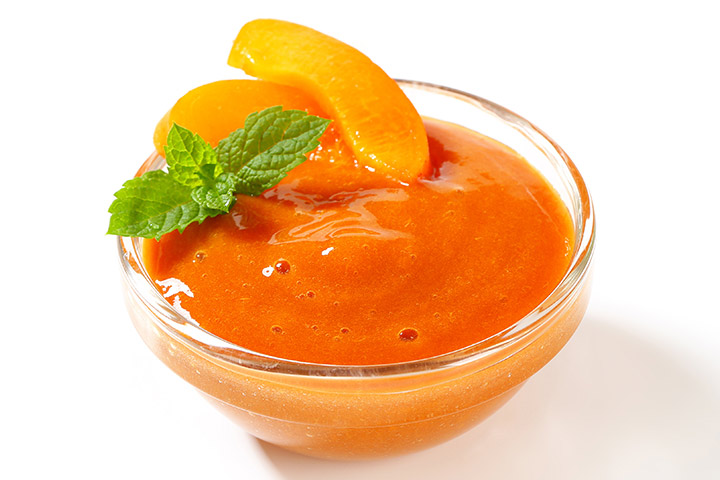
1. Apricot puree

Image: iStock

You will need:

  • 1 pound dried apricot
  • 2 cups pear, white grape juice or apple juice

How to:

  1. Boil the ingredients in a saucepan. Then cook in simmer for 15 minutes.
  2. Transfer the contents into a blender and blend well.
  3. Add in more juice to get thinner consistency or add cereal to thicken it up.

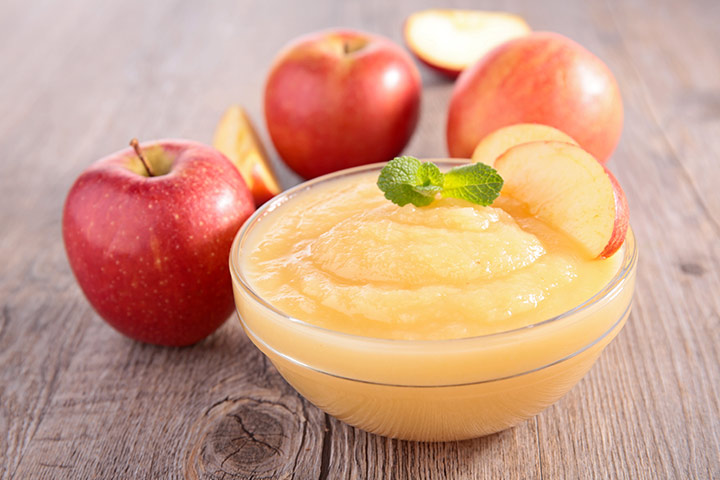
2. Apple sauce

Image: Shutterstock

You will need:

  • 1 apple (peeled, cut into slices)
  • 2 cups water

How to:

  1. Boil the apple slices in a saucepan. The slices need to immerse in water.
  2. Once done, mash the apple slices. Add water to get the desired consistency.

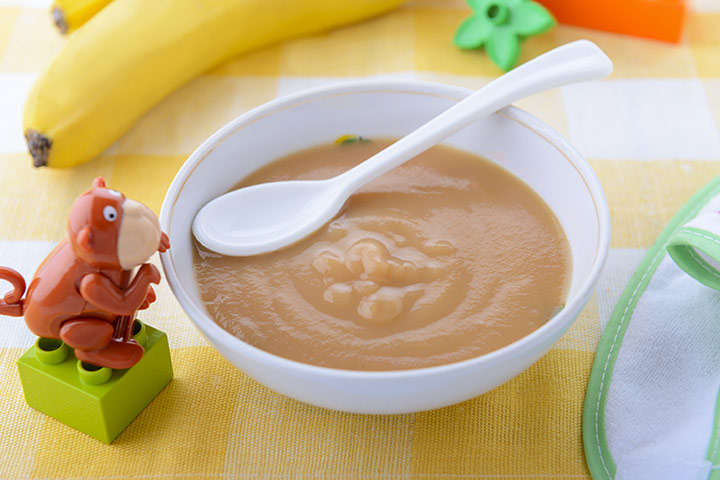
3. Banana puree

Image: Shutterstock

You will need:

  • 1 ripe banana (peeled and diced)

How to:

  1. Blend the banana in a food processor or mash in a bowl.
  2. Heat the mashed content for 25 seconds for added softness.
  3. Add milk or water to make it thinner or cereal to thicken it.

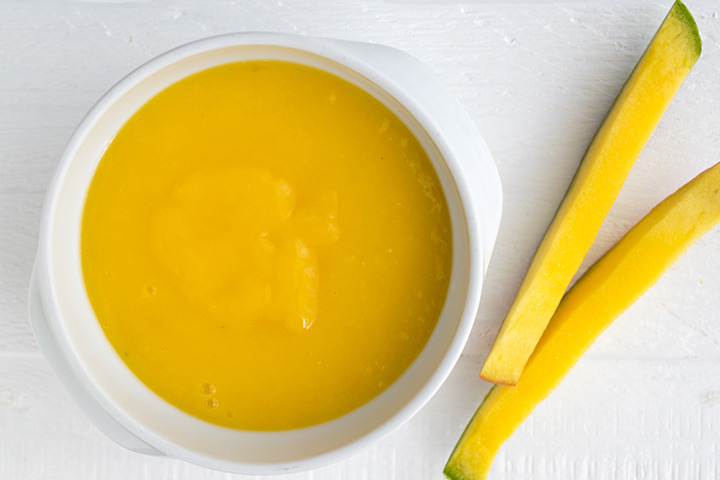
4. Mango delight

Image: Shutterstock

You will need:

  • 1 ripe mango (peeled, de-seeded, chunked)

How to:

  1. Blend the mango chunks in a food processor.
  2. Add in breast milk or formula milk to achieve desired consistency.

Lunch Recipes

5. Rice cereal

Image: Shutterstock

You will need:

  • 1/4 cup rice
  • 1 cup water
  • 2 tbsp formula or breast milk

How to:

  1. Wash the rice and cook it in a saucepan or pressure cooker.
  2. Mash the cooked rice and add formula or breast milk.

6. Barley apple porridge

Image: Shutterstock

You will need:

  • 1/4 cup ground barley
  • 3.5 cup water
  • 2tbsp formula or breast milk
  • 1 cup peeled and cubed apple

How to:

  1. Boil water in a saucepan and add barley.
  2. Cook in simmer for 10 minutes.
  3. Add apple slices and cook on low heat for two minutes.
  4. Puree the contents using a hand blender.

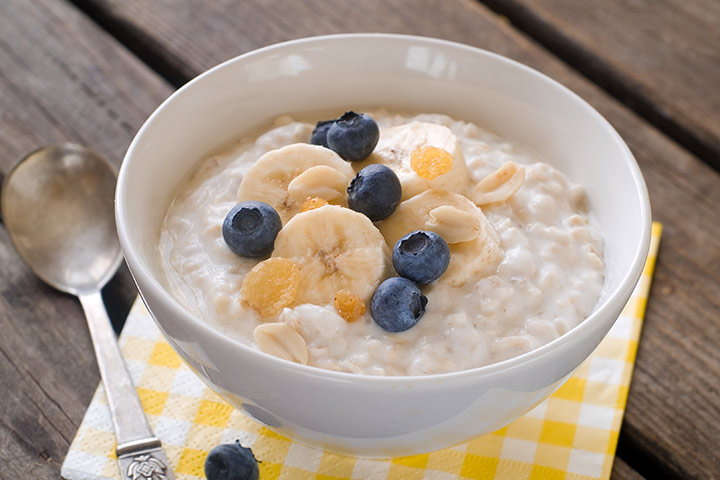
7. Oatmeal cereal

Image: Shutterstock

You will need:

  • 1/3 cup water
  • ¼ cup ground oats
  • 2tbsp formula or breast milk
  • ½ banana sliced

How to:

  1. Take a saucepan, add water and bring it to boil. Add oats and cook in simmer for 10 minutes.
  2. Once done, add bananas and mash well. Add formula or breast milk to get the desired consistency.

8. Baked apples

You will need:

  • 1 apple (peeled, cored)

How to:

  1. Spread butter on the cored apple and put it in a pan containing water.
  2. Preheat the oven to 400°F and place the pan in it.
  3. Bake the apple for 30 minutes.
  4. After baking, mash the apples to desired consistency.

Dinner Recipes

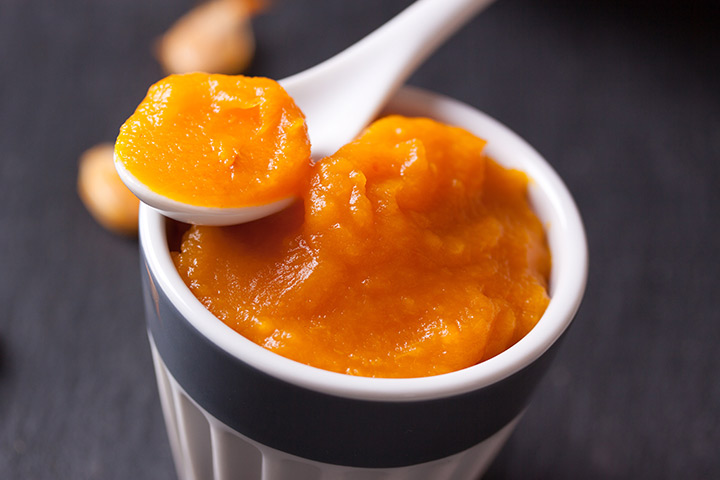
9. Pumpkin puree

Image: Shutterstock

You will need:

  • 1 medium sugar pumpkin (cut in half and De-seeded)

How to:

  1. Scoop out the seeds from the sugar pumpkin halves and drain the pumpkins with water in a baking pan.
  2. Bake for 40 minutes in the oven preheated to 400°F. Once the halves turn soft, scoop the squash meat and puree it in a food processor. Add water to achieve a smooth consistency.

10. Green beans puree

Image: Shutterstock

You will need:

  • 1 cup fresh beans

How to:

  1. Transfer the beans into a pan and place it in a steamer basket.
  2. Steam until tender. Keep a check on the water level.
  3. Once done, puree the contents in a blender and bring it to a smooth consistency.

11. Carrots puree

Image: Shutterstock

You will need:

  • 1 carrot (sweet, peeled, cut)

How to:

  1. Transfer the carrot slices into a steamer pan containing water. Steam until the carrots turn tender.
  2. Place the contents into a blender and puree them. Add water if needed.

12. Vegetable combo

Image: Shutterstock

You will need:

  • 1/8 cup fresh beans
  • 1/8 cup peas
  • ¼ cup summer and zucchini squash
  • 1/8 cup chopped carrots

How to:

  1. Add all the ingredients to a pan and add enough water.
  2. Cook until tender and puree the contents in a blender.
  3. Add water to get the desired consistency.

With such interesting recipes, it is likely that your baby would love her new diet. But you cannot feed her beyond small quantities just because she has developed a liking for it.

How Much Should A Six-Month-Old Eat?

Start with servings of 5-10ml or one-two teaspoons and increase the amount gradually . The baby may eat just half a spoon initially. Do not force-feed them.

Also, moving to solids is not easy as you need to be careful not to choke the baby or hurt their tummy with heavy foods. Take enough care not to harm the baby when you are feeding solids.

Heat food to lukewarm. Avoid heating it in the microwave as it creates pockets of heat that can burn the baby’s mouth. Instead, keep the food bowl in a bigger bowl of boiling water to heat it.

Caution While Preparing Stage 1 Baby Food

  1. Do not give cow milk to babies under one year. Also avoid honey, since it may contain spores that cause botulism.
  2. Never give slices of fruit or other finger foods to six-month-old because it could choke them.
  3. Refrain from store-bought baby foods as they are usually extremely sweet, acquainting the baby to a taste for sweet foods instead of healthy natural foods.
  4. Introduce one fruit at a time and check for any allergic reactions. Follow a four-day-wait rule in between two new foods.
  5. Feed your baby in a calm and pleasant environment.
  6. Prepare baby food in steel or glass containers. Say no to plastic containers, even if they are food-grade.
  7. Offer water in a sterile glass or steel cup, but not in a sipper or feeding bottle.
  8. Avoid biscuits as they contain refined flour, preservatives, and added sugar.
  9. Wash your hands before feeding your little one.

Introduce your baby to healthy foods so that they can develop a liking for them. Begin with easily digestible foods such as cereals, fruits, and veggies. Engage them with rhymes or soft music while eating. Place them on your lap while feeding, as this is a safe spot, and they already associate it with feeding. You can later move them to a feeding chair